When Is the Best Time for a Maternity Photoshoot? A Complete Guide
When Is the Best Time for a Maternity Photoshoot?For most expectant mothers, the best time for a mat...
 Glory Photography


 Wedding Photography
Glory Photography
Wedding Photography
Glory Photography
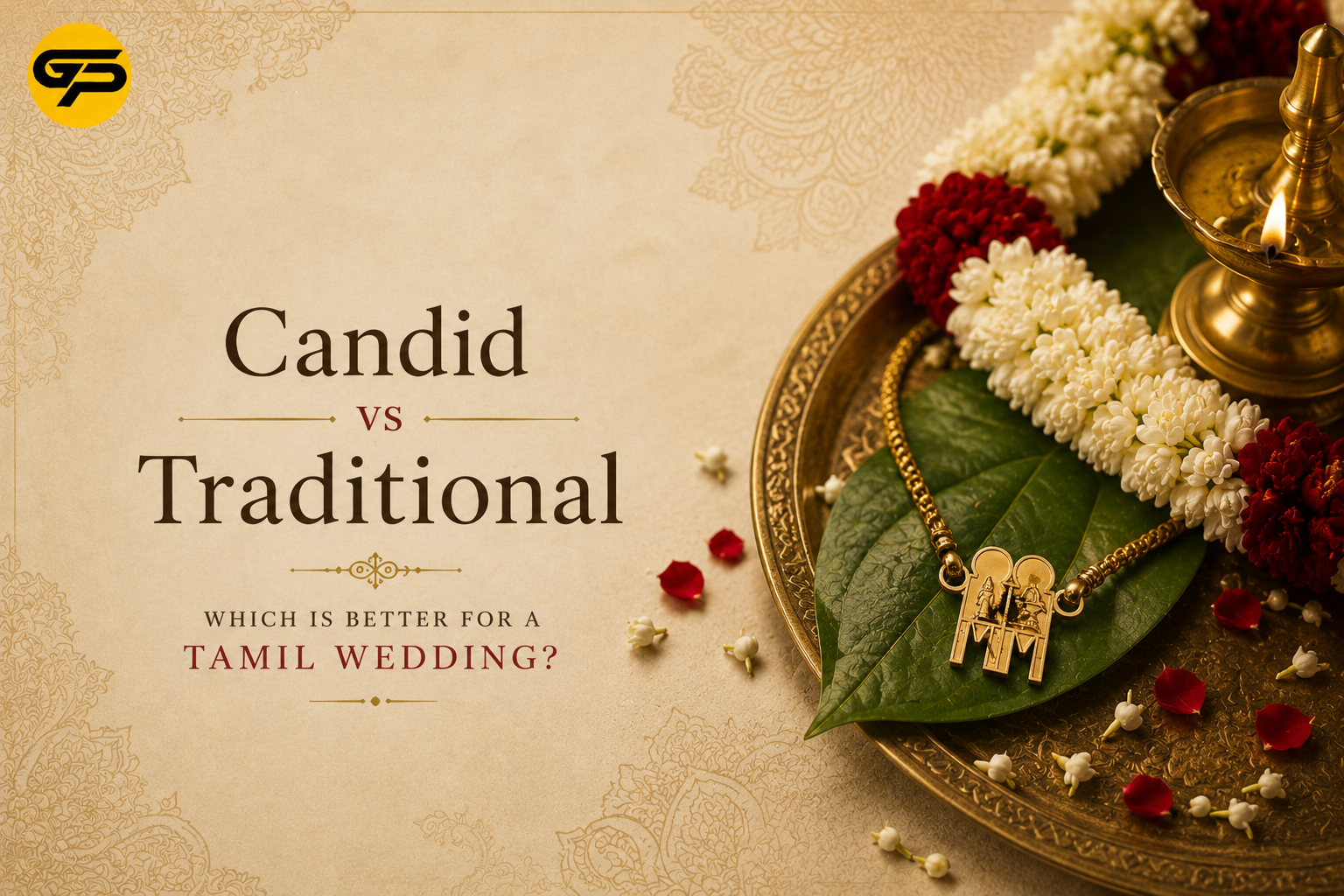
A Tamil wedding rarely follows a single mood. One moment, the priest is guiding the couple through a ritual that has been performed the same way for generations. The next, a grandmother is wiping away tears while a cousin bursts out laughing at something the groom whispered. Both moments matter. The question most couples eventually ask their photographer is simple: should we go candid, traditional, or both?
There isn't a one-size-fits-all answer. But understanding what each style actually does helps you make a choice that fits your family and your wedding.
Traditional photography is planned and structured. The photographer positions people, arranges group shots, and makes sure every important ritual is documented clearly and completely.
Think of the moment during Muhurtham when the priest instructs the couple on exact positioning, or when extended family lines up for a group photograph after the ceremony. Traditional coverage exists so that nothing important is missed, and so that every relative — including the ones who traveled from out of town just for the day — has a clear, identifiable photograph.
Parents and grandparents often value this style the most. It gives them something concrete: a formal photograph they can frame, print, or send to family who couldn't attend.
Candid photography is observational. Instead of arranging every shot, the photographer watches for moments as they happen — a nervous glance before the thaali is tied, laughter during the garland exchange, or the quiet second when a father realizes his daughter is now married.
This doesn't mean the photographer never gives direction. In real weddings, a little guidance is often necessary — asking someone to move slightly, or waiting a beat before a hug happens naturally. The difference is intent: candid photography prioritizes genuine reactions over posed perfection.
Neither style is complete on its own. Traditional coverage without candid moments can feel stiff in an album. Candid coverage without traditional shots can leave families wondering why there's no clear photo of the whole family together.
This is where planning matters most. Certain moments — the thaali-tying, the garland exchange, oonjal where it's part of the family's tradition — happen once and cannot be redone for the camera.
A photographer who understands the wedding timeline will know, in advance, which rituals need a planned position and multiple angles, which need a close-up of hands or expressions, and which need a wider shot showing the whole mandapam and the family watching. Depending on the family and wedding tradition, the sequence and significance of rituals can vary, so this planning conversation should happen before the wedding day, not during it.
For many Tamil weddings, yes. Traditional photography protects completeness. Candid photography protects emotion.
During the thaali-tying, for example, traditional coverage ensures the ritual itself is clearly and formally documented from the correct angle. At the same time, a second photographer working candidly can capture the mother's expression, a relative's hand covering their mouth, or a sibling's nervous smile just a few feet away. Together, these two sets of photographs tell a more complete story than either could alone.
Lean toward traditional coverage if your family has many elderly relatives, you want a classic printed album, or ritual documentation matters most to you.
Lean toward candid coverage if you'd rather avoid constant posing, want a storytelling-style album, or care most about how the day actually felt.
Choose a combination if you want both — a complete visual record along with the emotional moments that happen around it. This is the direction many families end up choosing once they've thought through what they actually want to remember.
There's no universal winner between candid and traditional wedding photography. The right choice depends on your family's expectations, the number of events in your wedding, and what you want to feel when you open the album years from now.
At Glory Photography, based in Madurai, the approach leans toward blending genuine emotions with clear, respectful documentation of tradition — because a Tamil wedding usually asks for both. Before booking any photographer, it's worth sitting down and going through your wedding timeline, the rituals that matter most to your family, your family-photo requirements, and the overall style you're drawn to. That conversation, more than any style label, is what determines how happy you'll be with your wedding album.
Latest Articles
When Is the Best Time for a Maternity Photoshoot?For most expectant mothers, the best time for a mat...
Glory Photography
Madurai offers engaged couples a rare mix of heritage architecture, temple surroundings, rocky hills...
Glory Photography